
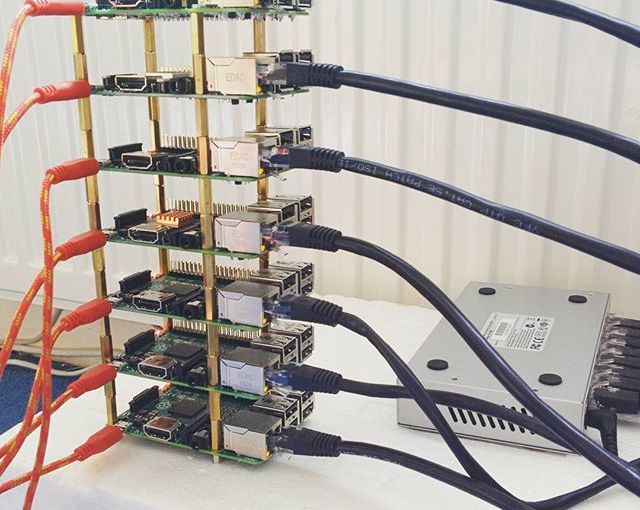
The development of IoT has seen a rise of Docker on single-board computers for the ease and consistency of service deployment. The fact that most of the devices are built upon ARM architecture can pose a challenge to the usage of Docker in an IoT setting.
Continue reading Docker on IoT: Mind the Gap of ARM ArchitectureCategory: Linux system administration

Docker: the Game-Changing Player in Web Development
It is hard to believe the impact of open-source technologies: Docker was first released in 2013 and has gradually become the choice of virtualization of many web projects. How is Docker different? What makes Docker a game-changing player?
Continue reading Docker: the Game-Changing Player in Web Development
FTP vs SFTP for the Tech Side of Your Business
File management is fundamental in certain business scenarios that can be perfectly resembled by the folder-and-file model ubiquitously shared across Windows, Mac OS X and Linux. FTP and SFTP can sound grandpa, but really remain the great solutions for an initial iteration of the tech side of a business. Thus, which one should you start with?
Continue reading FTP vs SFTP for the Tech Side of Your Business
HTTP Caching on Apache: Why and How for Legacy Web Systems
When a legacy web system becomes noticeably slower, it is important to react before a critical service failure. Studio theYANG introduces reverse proxy caching on Apache, the easiest and the most effective way of relieving the load of your system. Here’s why and how.
Continue reading HTTP Caching on Apache: Why and How for Legacy Web Systems
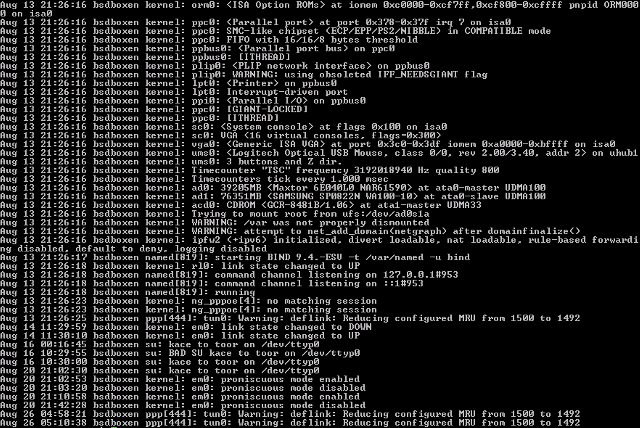
Logging Correctly with syslogd
System logging is usually the most ignored part in web systems and is often done in an incorrect manner. This is a risk when the system becomes legacy and its complexity develops. In this post, Studio theYANG discusses how to log your system correctly with syslogd.
 Studio theYANG